



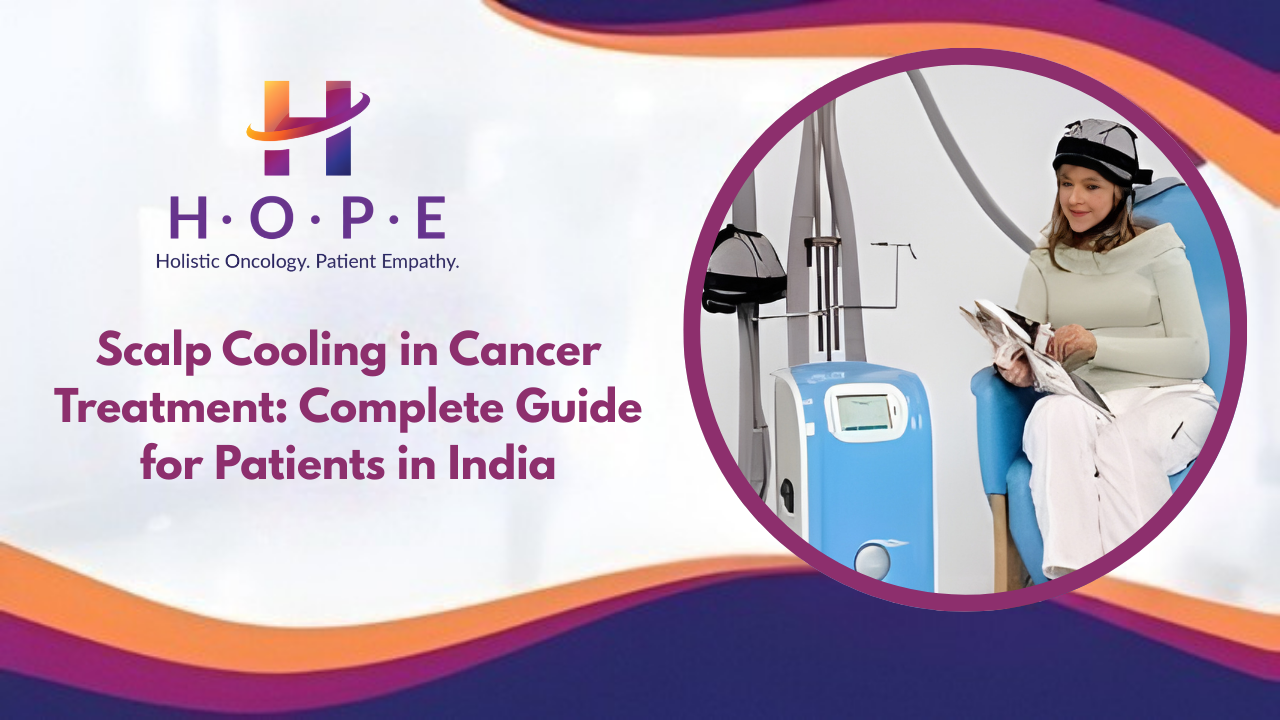
Patients undergoing chemotherapy experience great emotional stress due to the loss of hair. It is a very sensitive issue for them. Our self-confidence, self-identity, and our ability to live life normally, depend on our hair. H.O.P.E. Oncology Clinic knows that Cancer treatment is not just controlling the growth of Cancer but also to provide emotional strength and dignity to the patient during the course of treatment. The blog provides an overall and genuine information on Scalp Cooling in Cancer Treatment
Why does chemotherapy cause hair loss?
Chemotherapy medications work to destroy Cancer cells that grow with rapid speed. The body contains hair follicles hair follicles are also among the fastest-growing cells in the body. Chemotherapy causes damage to these cells because it affects their normal growth process. Hair loss occurs with some chemotherapy drugs because these drugs cause destruction to hair follicles through their harmful effects. The treatment results depend mainly on three factors which include the drug used and the dosage and the treatment schedule. The oncologist provided a complete explanation about hair loss as an expected outcome before our treatment started.
What is scalp cooling?
Scalp cooling is a treatment that works as a supportive treatment to assist cancer patients in reducing the extent of hair loss during their chemotherapy treatment sessions. The treatment involves a cooling device, which cools the scalp of the patient, and the patient is expected to use the cooling treatment before, during, and after the chemotherapy treatment sessions.
The cold sensation of the scalp causes the blood vessels to constrict, reducing the flow of the chemotherapy drugs to the hair follicles. The cold environment of the scalp reduces the activities of the hair root, thereby reducing the effects of the drug on the hair root.
The treatment does not promise hair for the patients, but it reduces the extent of hair loss for the majority of the patients compared to those who do not undergo the treatment. The treatment has a very cold effect, especially at the onset, but the patients get accustomed to it after some time.
Medical professionals offer the scalp cooling treatment to cancer patients with solid tumors to monitor the treatment process.
Scalp Cooling in Cancer Treatment: How Does It Work?
Scalp cooling is performed in two main ways:
1. Less Blood to the Scalp Area
Scalp cooling causes blood vessels on the scalp to become narrower. This means that the amount of medicine entering the scalp area is minimized.
2. Slower Hair Follicle Activity
Scalp cooling decreases the metabolic processes that occur in the scalp. Chemotherapy works by targeting rapidly growing cells, and slower metabolism means slower-growing cells.
Who Can Consider Scalp Cooling?
This process has been found to be appropriate for the following chemotherapy treatments for cancer: Breast Cancer, Ovarian Cancer, Gastrointestinal Cancer, etc. This treatment does not work for those suffering from blood-related cancer types such as Leukaemia and Lymphoma. The H.O.P.E. Oncology Clinic provides an assessment of the patients to determine whether the scalp cooling treatment is applicable to them.
What Happens on Treatment Day?
The cooling cap has to be applied 20-30 minutes before the beginning of the chemotherapy session. The cooling cap has to be used throughout the entire time of the chemotherapy session. The cooling system has to be used for 60-90 minutes after the end of the chemotherapy session. “Brain freeze” occurs for 10-15 minutes. The patient becomes tolerant to the coldness of the scalp after 10-15 minutes. The nursing staff of H.O.P.E. Oncology Clinic is here to assist you with your treatment.
Scalp Cooling in Cancer Treatment: How Effective Is Scalp Cooling?
It does not guarantee the conservation of all the hairs on the scalp. The outcome varies from person to person. It depends on the type of drugs used, the amount of drugs used, the thickness of the hair, and the cap’s fit.
Different people experience varying amounts of hair loss because some lose a little while others lose almost all their hairs, although not as many as they would have lost without the devices.
The H.O.P.E. Oncology Clinic helps set realistic expectations regarding the performance of the devices.
Is Scalp Cooling Safe?
Scalp cooling has been proven safe for the treatment of solid tumors with the right medical guidance. Temporary side effects of scalp cooling are cold chills, scalp discomfort, headache, and feeling cold during the session.
Hair Care Tips During Chemotherapy
- Mild shampoo for hair
- Do not wash hair with hot water
- Just pat dry, don't rub
- No tight hairstyles
- No hair straightening/curling
- No chemical treatment/coloring